Savings & CDs · Grow Your Savings

Compounding and Your Return Calculator

Short answer: What does the Compounding and Your Return Calculator calculate?

The Compounding and Your Return Calculator works out daily compounding, monthly compounding and quarterly compounding. See how often interest compounds changes what the same rate actually earns. You enter deposit amount, annual rate (%) and years, and results update as you type. It uses US rules and USD, and it is free to use on this page.

Updated · Applies to the United States (US rules, USD)

  • Free to use here · embed on the Pro plan
  • 3 inputs · 5 results
  • Works in 6 languages
  • Uses US rules and USD

Try the Compounding and Your Return Calculator

See the effect of compounding frequency — results update as you type.

See all 12 themes
Theme
Mode

Ledger · Free on every plan · The classic CalcFunnel card: gradient results header, clean panels.

Loads from app.calcfunnel.com when you scroll here.

Estimates only — not a loan offer or financial advice. Switch theme and light/dark above to see how it could look on your site.

Put this calculator on your website

What this calculator does

What the Compounding and Your Return calculator works out

The Compounding and Your Return Calculator is a free, embeddable calculator from CalcFunnel. See how often interest compounds changes what the same rate actually earns.

You enter 3 inputs: deposit amount, annual rate (%) and years.

It returns daily compounding, monthly compounding, quarterly compounding, annual compounding and difference: daily vs annual.

Built for banks, credit unions and advisors. Embedding it on your own website needs the Pro plan (from $150/month, with a 14-day free trial), which unlocks the Savings & CDs category.

Results it shows

  1. 01Daily Compounding
  2. 02Monthly Compounding
  3. 03Quarterly Compounding
  4. 04Annual Compounding
  5. 05Difference: Daily vs Annual

The first figure — daily compounding — is the headline result.

Inputs

What you can change

Every field visitors can adjust, straight from the calculator, with the same help text they see on the info icon. Each one starts with a sensible default, and the 5 results update as they type.

Deposit Amount
The amount you deposit.
Annual Rate (%)
The stated annual interest rate, applied at each compounding frequency.
Years
How many years the money grows.

Definitions

Compounding and Your Return terms, defined

The terms this calculator uses, in plain words. The same definitions appear inside the calculator for your visitors.

Compounding frequency
How often earned interest is added to the balance so that it begins earning interest itself. This calculator runs the same deposit, rate and number of years at four frequencies: daily, monthly, quarterly and annually. The more often interest compounds, the higher the ending balance, though the gains shrink as frequency increases.
Stated annual rate
The nominal yearly rate before compounding, sometimes called the annual percentage rate on a deposit. It is divided by the number of compounding periods in a year and applied that many times. A 5% stated rate compounded monthly means about 0.4167% is credited each month, which works out to a bit more than 5% over the year.
Annual percentage yield (APY)
The effective rate earned over one year once compounding is included. It equals the stated rate only when interest compounds once a year; with more frequent compounding, APY is higher. Because APY puts all frequencies on the same footing, it is the better figure for comparing accounts than the stated rate alone.
Compound interest
Interest calculated on the original deposit plus interest already credited. Every time interest compounds, the base for the next calculation grows. Over longer periods this effect matters far more than the choice of frequency, which is why the difference between daily and annual compounding in this calculator grows with the number of years.
Daily compounding
Crediting interest every day, typically by dividing the annual rate by 365. It produces the highest balance of the four frequencies shown, but only slightly more than monthly compounding. The difference between daily and annual compounding, shown as its own result, is the most that compounding frequency alone can add at this rate and term.
Annual compounding
Crediting interest once a year. It is the baseline in this calculator because the effective yield equals the stated rate exactly. Any account that compounds more often will end with a larger balance at the same stated rate. Some bonds and CDs compound annually or pay simple interest, so the distinction matters when comparing products.
Compounding period
The interval between interest credits: a day, a month, a quarter or a year. The periodic rate is the stated annual rate divided by the number of periods per year. Monthly compounding at 5% uses twelve periods at about 0.4167% each; quarterly uses four periods at 1.25% each. Shorter periods mean slightly more growth.
Deposit amount
The starting principal, deposited once with no additions or withdrawals. All four frequencies begin from this same amount, so the results isolate the effect of compounding. Because every result is proportional to the deposit, the dollar gap between frequencies scales with it, while the percentage gap depends only on the rate and years.

For your website

How it looks on your site

Put the Compounding and Your Return Calculator on your own site with your colors, copy and lead form, in whichever of these five ways suits the page. Every calculation can arrive in your CRM with the numbers attached.

Works on WordPress, Wix, Squarespace, Webflow, Shopify, GoHighLevel and plain HTML — paste one line into an HTML or code block. No plugin needed.

  • Inline, without an iframe

    Paste the snippet where the Compounding and Your Return Calculator should appear. It renders into your page, fills the width of its container and grows to fit.

    Best for: Landing pages, blog posts, calculator pages

  • Popup button

    A button sits on your page; one click opens the calculator in a popup over it.

    Best for: Pricing sections, hero areas, listings

  • Floating corner widget

    Paste once (or in your site-wide footer code) for a floating bubble in the corner of every page.

    Best for: Site-wide, always one click away

  • Your own link or button

    Give any existing link, button or image a class and it opens the calculator when clicked.

    Best for: Menus, images, in-text links

  • Direct link

    A full-page link to the calculator for emails, social posts, QR codes or a menu item.

    Best for: Email, social, print, QR codes
Start free How embedding works

Free plan, no card. 14-day trial on Pro & Business.

Widgets

Use it in a widget

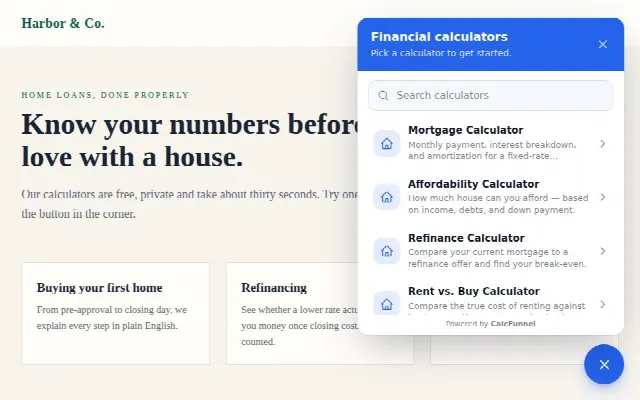
Group the Compounding and Your Return Calculator with up to 11 other calculators in one widget: a floating launcher, tabs, a row of buttons or a card grid. Widgets per plan: Free 1, Pro 10, Business unlimited.

  • Floating launcher widget, Classic bubble design: Round launcher with a soft pulse and a clean list.

    Floating launcher

    A bubble in the corner of every page opens a menu of your calculators.

    6 ready-made designs
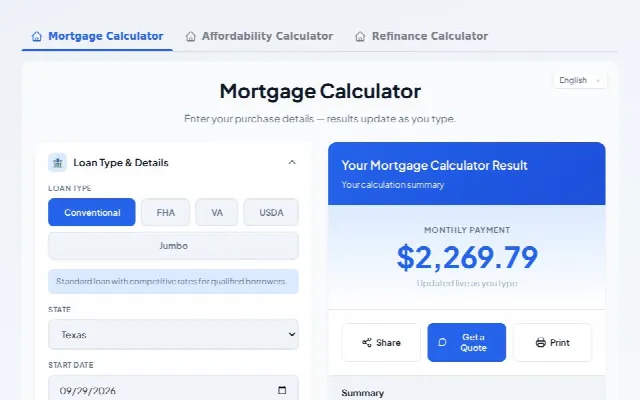
  • Tabs widget, Underline design: Text tabs with an animated underline.

    Tabs

    Calculators side by side in one block on the page, switched with tabs.

    6 ready-made designs
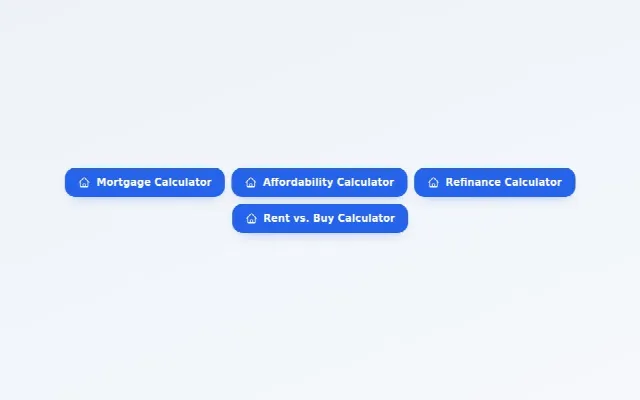
  • Buttons widget, Solid design: Filled buttons in your brand color.

    Buttons

    A row of buttons; each one opens its calculator in a popup.

    6 ready-made designs
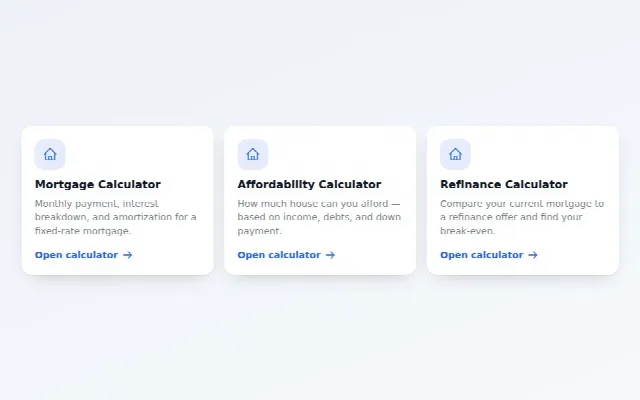
  • Cards grid widget, Elevated design: White cards with a soft shadow and lift.

    Cards grid

    A grid of cards with an icon and a short blurb; click to open the calculator.

    6 ready-made designs

See every widget design

FAQ

Compounding and Your Return calculator FAQs

Still stuck? Ask the team — we reply within one business day.

Q.01What does the Compounding and Your Return Calculator calculate?
See how often interest compounds changes what the same rate actually earns. It returns daily compounding, monthly compounding, quarterly compounding, annual compounding and difference: daily vs annual.
Q.02What information do I need to use the Compounding and Your Return Calculator?
You enter 3 inputs: deposit amount, annual rate (%) and years. Every input starts with a sensible default, so you can change only what you know.
Q.03What does “Deposit Amount” mean in the Compounding and Your Return Calculator?
The amount you deposit.
Q.04What does “Annual Rate (%)” mean in the Compounding and Your Return Calculator?
The stated annual interest rate, applied at each compounding frequency.
Q.05Is the Compounding and Your Return Calculator free to use?
Yes — you can use it on this page for free, without an account. Embedding it on your own website needs the Pro plan (from $150/month, with a 14-day free trial), which unlocks the Savings & CDs category. Compare plans.
Q.06Can I embed the Compounding and Your Return Calculator on my website?
Yes. Embed it inline, as a popup button, as a floating corner widget, from your own link or button, or share a direct link. It works on WordPress, Wix, Squarespace, Webflow, Shopify, GoHighLevel and plain HTML sites with one line of code — see embedding.
Q.07Can I change how the Compounding and Your Return Calculator looks?
Yes. Choose from 12 themes, each in light and dark, then set your own brand colors and font. Ledger, Minimal, Compact come with every plan; the others unlock on Pro and Business.
Q.08Is the Compounding and Your Return Calculator available in other languages?
Yes. It works in English, Spanish, Simplified Chinese, Korean, Vietnamese and Arabic, with a right-to-left layout in Arabic. Labels, tooltips, results and definitions are translated, visitors can switch language inside the calculator, and amounts stay in US dollars and US number format.
Q.09Can the calculator capture leads?
Yes. It can end with a lead form, a Get a Quote form, a Share panel or a button to any URL. Leads are saved with the inputs and results attached and can be forwarded to your CRM by webhook.
Q.10Are the Compounding and Your Return results financial advice?
No. Estimates only. Shows the same principal and rate compounded at different frequencies; taxes are not included.

Related savings & cds calculators

All 15 in Savings & CDs

Your website does the math. You get the lead.

The Compounding and Your Return Calculator is one of 208 calculators you can brand and embed with one line of code.

  • Free plan, no card
  • 14-day trial on Pro & Business
  • Cancel any time